
Inground pool removal
Tuscaloosa Demolition Pros: Inground Pool Removal in Tuscaloosa, AL
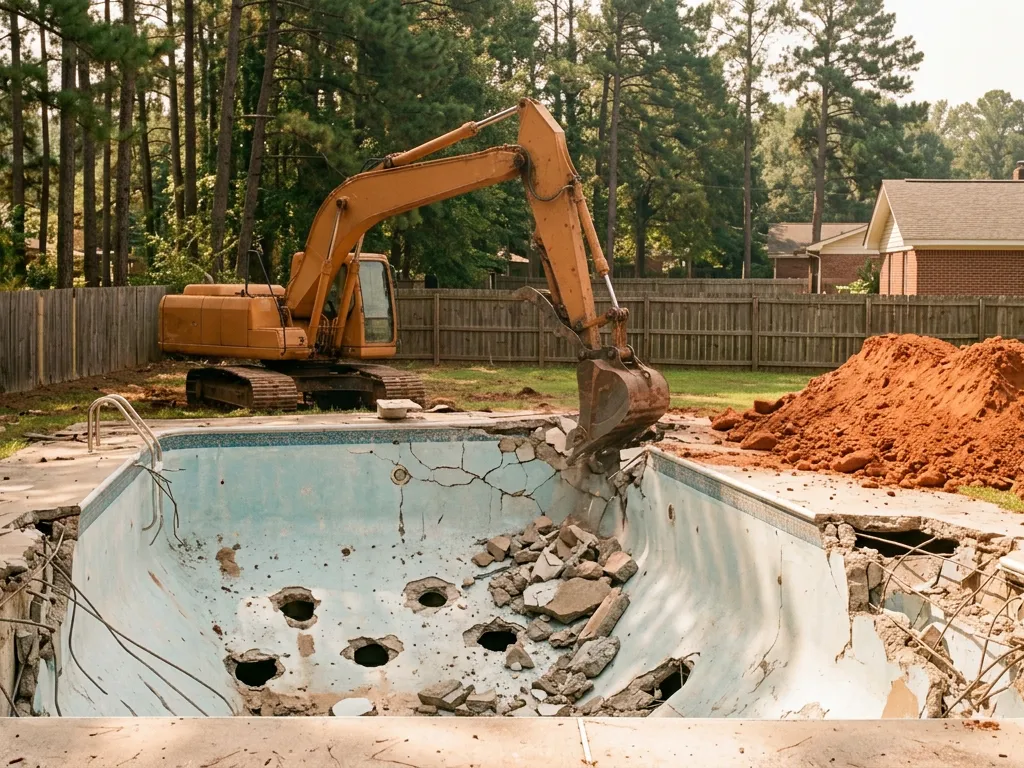
An unused inground pool broken out and backfilled, or dug out completely, and the yard graded back toward lawn.
- Tuscaloosa, Northport and towns within 20 miles
- Licensed, insured local contractors
- Houses, mobile homes, garages and pools
- Written price before work starts
- Debris hauled and the lot graded
Tuscaloosa Demolition Pros connects Tuscaloosa homeowners with a local contractor who removes inground pools, whether the pool came with a house you just bought or has sat green behind the fence for years. Below are the two ways a pool comes out, what each costs, how the fill is handled, and the City floodplain and lake rules worth checking before an excavator comes through the gate.
Proper fill, compacted in layers at $3 to $6 per cubic yard, costs little next to digging a settled, half-filled pool back out, a job HomeBlue's Tuscaloosa guide prices at $6,700 to $10,700 for a typical pool.
Two Ways to Remove an Inground Pool in Tuscaloosa
A partial removal breaks out the coping and the top of the walls, punches drainage holes through the floor so water can pass, and fills the shell with clean fill, compacted as it goes in. A full removal digs out the entire shell, concrete, rebar, liner and plumbing alike, hauls it away, and backfills the hole.
Partial costs less and leaves less to haul. Full removal leaves nothing buried, which matters if you plan to build on that spot later or sell to a buyer who asks what is under the lawn.
Inground Pool Removal Cost in Tuscaloosa
$6,700 to $10,700
HomeBlue's Tuscaloosa cost guide puts removing a typical residential pool at $6,700 to $10,700. HomeGuide's national inground range runs wider, $4,000 to $16,000.
HomeBlue's local range covers a typical residential pool. Where yours lands depends on size and depth, gunite or concrete versus a vinyl liner, a deck or patio that has to come out first, and how a machine gets into the back yard. A narrow side yard or a fence section that has to come down adds time. Fill and finish are their own lines: grading runs $0.50 to $5.00 per square foot on HomeGuide.
If the surrounding concrete goes too, ask for concrete removal or deck removal on the same quote.
The Pool Removal Process, Step by Step
Ask whether the quote ends with topsoil and seed or straw, or with bare dirt.
- Drain the pool and have the pump's electrical circuit shut off.
- Send Alabama 811 notice so buried lines are marked; the call is free and each utility marks its own lines.
- Break out the coping, deck and upper walls with an excavator or a skid steer breaker.
- Punch drainage holes in the floor, or haul the whole shell for a full removal.
- Bring in fill, compact it in layers, cap with topsoil and grade so water runs away from the house.
Floodplain and Lake Rules for Tuscaloosa Pool Removal
The City of Tuscaloosa has adopted the 2021 International Swimming Pool and Spa Code, but no pool-removal permit rule turned up, so ask the Building and Inspection Division (205-248-5110) before work starts. Its residential permit form asks for an Alabama General Contractor License number on pool work over $5,000.
Two more rules are worth checking. The City names floodplains along the Black Warrior River, Cribbs Mill Creek, Cypress Creek and Cottondale Creek, among others, and generally bars development in floodways. A lot in the watershed of Lake Tuscaloosa, Harris Lake or Lake Nicol may need a Site Stabilization Plan, which can put silt fence on the job. Outside the city, pool removal in Vance runs through its Chief Building Inspector, who takes permits online.
Signs Your Inground Pool Should Go
- A shell cracked badly enough that it will not hold water
- A liner or plaster quote bigger than the swimming is worth
- Green water and mosquitoes every summer
- A pool that came with the house and nobody wanted
- Coping and deck heaving or pulling away from the edge
- Worry about liability from a pool nobody watches
Price Your Pool Removal in Tuscaloosa
Tell us the pool type, its size and how a machine gets to it, and a local contractor calls back with partial and full prices.
Call (205) 590-9261Pool Removal Available In
Frequently Asked Questions
Pool Removal Questions From Tuscaloosa Owners
How much does inground pool removal cost in Tuscaloosa?
HomeBlue's Tuscaloosa guide puts a typical residential pool at $6,700 to $10,700. A partial removal of a small vinyl pool sits low; a full removal of a large concrete pool with a deck and a tight side yard pushes toward the top or beyond it.
What are the signs a pool should be filled in rather than repaired?
A cracked shell, a failed liner or plaster, a pump and filter due for replacement, or a pool nobody swims in. When the repair estimate rivals the removal price, filling it in ends the upkeep for good.
Is a filled-in pool a problem when I sell the house?
Some buyers ask. Keep the contractor's invoice showing whether the pool was partly or fully removed, where the drainage holes were punched and how the fill was compacted. A full removal leaves the fewest questions behind.
Do I need a permit to remove a pool in Tuscaloosa?
Ask the City's Building and Inspection Division before anything is broken out. The City permits demolitions and has adopted a pool and spa code, and its staff can say whether your removal counts. Lots near Lake Tuscaloosa or in its watershed carry extra rules.
Can the yard be used right after pool removal?
The fill has to be compacted in layers and graded so water drains away from the house. Ask whether topsoil, seed or straw are on the quote, because bare subsoil can wash in the first heavy rain without them.